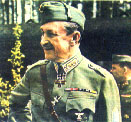
Mannerheim was a member of Finnish aristocracy,
and spoke swedish as his
native tongue. He served in the Imperial Russian Army from 1890's to 1917
taking part in the Russo-Japanese War of 1904-05 and making an important
expedition through Central Asia in 1908. In the Great War he served as
lieutenant general commanding a cavalry division and later a cavalry corps.
1918 he was the commander of
the government forces in the Finnish Civil War. After his army had been
victorious he acted as head of the state for a year until
first president could be elected. He was a canditate in the election
but lost. The 20's he spent in privacy. In the 30's he was called
to act as chairman of Defense Council and promoted to the rank of field marshal.
President Kallio gave the
command of the armed forces to Mannerheim after the start of the Winter
War and Mannerheim held this post until January 1945. Mannerheim was
supporting the the peace in March 1940, because he knew that Finnish forces
were at a breaking point.
Mannerheim accepted the support of the Germans during the peace between the wars,
although he was never German-minded. In the Continuation War Mannerheim
refused categorically to attack either Leningrad or Murmansk railroad
despite German pleas. On his 75th anniversary in 1942 he was promoted to
the rank of marshal of Finland, and he remains as the only person ever promoted to that rank.
In the summer of 1944 it was decided that
Mannerheim was the only person, who could guide Finland to peace after
resignation of president Ryti and he was elected by the
Eduskunta (parliament) as the president in August 1944. He remained in the office
until 1946 when he resigned and spent rest
of his life mostly in Switzerland for reasons of health. His funerals in
Helsinki were attended by thousands of people.
Picture is taken on marshal's 75th anniversary.
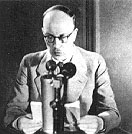
Ryti had been in banking business before he became
the prime minister and later president in 1940. He acted as prime minister
by the time the peace of Moscow was signed in 1940. In the Continuation War he
with Mannerheim and foreign minister decided the policies of Finland. When
Finland was in crisis in the summer of 1944 he signed a pact with the
Germans that Finland will not negotiate peace under his leadership,
because it was imperative to get new weapons from Germany. He resigned in
Aug 1944 so that Finnish government could start peace negotiations.
Later he was sentenced to prison for 10 years by the war guilt tribunal
which the Soviets had demanded. In the picture Ryti informs the people
in the radio that the state of war exists between Finland
and Soviet Union on 25 Jun 1941.
Kallio was the president during the Winter War. He was a sick man during his last years in the office and he didn't had much influence on the conduct of the war. He left the office in December 1940 and died in the Helsinki railroad station immediately after that.
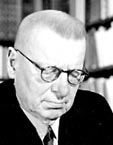
Paasikivi had been a prominent figure
in the politics already when Finland gain her independence in 1917.
He was the leader of the delegation that negotiated with Soviets in 1939.
He wasn't in a remarkable position during the beginning of the
Continuation War, but later he was sent to negotiate the peace with
Soviets in spring of 1944 to Stockholm. After the failure in the negotiations he stayed
away from politics until peace was signed, and then first as prime
minister and later as president guided Finland to the peace and tried to cope
on with the Allied Control Commission (which was supervising
that the peace terms are followed) with success. Later in 1948
he signed the so-called YYA-treaty with the Soviet Union, which promised
Soviet support to Finland, if Finland is attacked by Germany or her
allies, not automatically like in NATO, but after negotiations.
Soviet Union
Stalin had visited Finland in 1905, and he had signed the declaration that gave independence to Finland in 1917. In 1939 he was worried about the safety of the western borders of the Soviet Union and made the Molotov-Ribbentrop Pact in August 1939. In the secret protocol Finland and the Baltic states were given into the Soviet sphere of influence. Stalin didn't understand the stubborness of Finns in the negotiations that followed. He also thought that the Finnish working class was ready for revolution. His calculations failed and he was ready to make peace in the March 1940, because he didn't want to risk war with the French and English. During the Continuation War he tried to make peace with Finland already in the August 1941. Later his harsh terms were rejected by Finns many times and he decided to force Finland to peace with a large offensive in 1944. His aim was not to destroy Finland, as he had told to the other allies. Later he showed appreciation towards Finland, and made a 'YYA-pact' (Friendship, Co-operation and Assistance) in 1948, which promised Soviet help for Finland if Finland is attacked by 'Germany or her allies' (meaning US).
Molotov was a loyal yes-man of Stalin during his term in the office. He was also a very good negotiator. Finns usually considered him as the worst man in the Kremlin, and that he particularily wanted to destroy Finland. Molotov had lots of influence in the affairs in the Soviet Union and Finnish peace negotiations always went through his office.
Zhdanov was one of the top politicians of the stalinist Soviet Union. He had been sovietizing Estonia in 1940 and during the Continuation War he was the party leader of Leningrad. After Finland had signed armistice, the Allies sent a Control Commission to see out that the armistice terms are followed. It had only Russian and British members, as the United States had not been at war with Finland. Commission was headed by Zhdanov, who came to be known as a strict and disciplined man. Zhdanov passed away only few months after the Commission had left Finland as the result of the Peace Treaty of Paris.
Germany
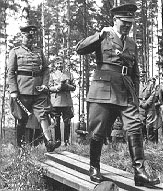
Hitler didn't care about Finland in the time of the Winter War, and he believed like rest of the world that Finland can't last for more than few weeks. He was however amazed to see that Finland could stand against Soviets for 105 days in the Winter War. After Hitler began to plan operation Barbarossa, he thought from the beginning that Finns should be included in the attack. He sought to make relations between two countries better. After start of the Barbarossa he declared that Finns stand aside Germans. Hitler tried to get Finland more actively involved in the war and to make a pact with Germany. As a token of appreciation, he visited Finland on Marshal Mannerheim's 75th anniversary. After Finland had began to negotiate peace in 1944, Hitler ordered deliveries of supplies to be cut, but later after Russian attack of summer 1944, deliveries were resumed. After Finland had made armistice with Soviet Union, Hitler raged and condemned Finns as traitors. Picture is taken when Hitler was visiting Finland. Behind Hitler is Chief of Staff Field Marshal Wilhelm Keitel.
Dietl was a professional German officer of the mountain troops. He had been commanding German forces in the battles of Narvik in 1940. In 1941 he was the commander of the Gebirgskorps Norwegen, which tried to conquer Murmansk. From 1942 he commanded AOK Lappland, later 20. Gebirgsarmee until his death in an air accident in June 1944. He was fond of in Finland since he wasn't so military-minded as the most German officers.
Rendulic was appointed to the post held formerly by Dietl after Dietl's accidental death. Rendulic had been commanding a panzer army in the Ukraine. He was a civilized and formal man. Finnish commentaries have largely credited him with the destruction of Lapland , though it was a normal procedure for retreating armies to destroy all buildings. Rendulic showed a remarkable administrative capacibility, as he was able to organize a retreat of 200000 men across the arctic wilderness with only few roads and with low supplies.